![]() |
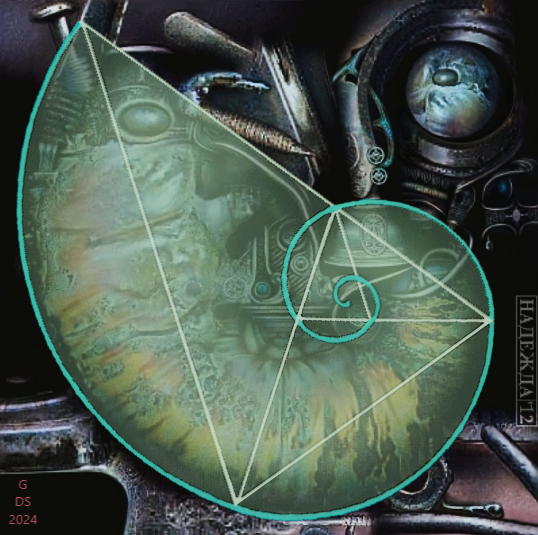
| The Mirror of Venus: The 5 Keys - 2023, DS. |
(Formerly Trans-D Digital Art, a blog investigating - & creating - artistic anomalies since 2011.)
Saturday, May 18, 2024
The Mirror of Venus: 5 Keys
Wednesday, May 1, 2024
The First of May
![]() |
| Fetal Venus & Her First Dove (sketch #1) - digital - 2024, DS. |

Sunday, March 31, 2024
Apple Blossoms
![]() |
| Apple Blossoms in Hopewell's Orchard - Photo credit: NPS/A. Kane. |
"It is remarkable how closely the history of the Apple-tree is connected with that of man. The geologist tells us that the order of the Rosaceæ, which includes the Apple, also the true Grasses, and the Labiatæ, or Mints, were introduced only a short time previous to the appearance of man on the globe.
...Pliny, adopting the distinction of Theophrastus, says, “Of trees there are some which are altogether wild, some more civilized.” Theophrastus includes the apple among the last; and, indeed, it is in this sense the most civilized of all trees. It is as harmless as a dove, as beautiful as a rose, and as valuable as flocks and herds. It has been longer cultivated than any other, and so is more humanized; and who knows but, like the dog, it will at length be no longer traceable to its wild original? It migrates with man, like the dog and horse and cow; first, perchance, from Greece to Italy, thence to England, thence to America; and our Western emigrant is still marching steadily toward the setting sun with the seeds of the apple in his pocket, or perhaps a few young trees strapped to his load.
...Men could afford then to stick a tree by every wall-side and let it take its chance. I see nobody planting trees to-day in such out-of-the-way places, along the lonely roads and lanes, and at the bottom of dells in the wood. Now that they have grafted trees, and pay a price for them, they collect them into a plat by their houses, and fence them in,—and the end of it all will be that we shall be compelled to look for our apples in a barrel."
Tuesday, March 19, 2024
An Auspicious Day
![]() |
| The Three Golden Eggs of Happiness, G-DS-2024 Alternative title: 3 Sleeping Doves |
We seem to be experiencing a grand trine of celebratory days today: the first day of spring, the neo-pagan and Wiccan holiday of Ostara, and the first day of the Persian new year! So, put aside your woe and despair and knock yourself out with the pleasure of impractical things - we've hit the jackpot!
I found three (pretty-much) perfect golden eggs (sourced here)... and, now, you have!
Smile. You'll feel better. It's a known fact. :-)
Sunday, March 17, 2024
The Paisley Pattern & the Golden Meme
![]() |
| Phi shells served up on a modern paisley fabric (sourced here). Geometry: 2024, DS. |
The images posted above, and inset right, and inset left and right below are the result of a new 2-dimensional toy I developed last year and introduced in The Universe in a Phi Shell: phi shells. I can't remember what inspired me to make phi spirals into phi shells, but it was probably pretty elementary. However, once I saw the effect the shells produced on some images, I was astounded. In so many cases the phi shell was like an envelope - die-cut to fit a golden spiral - or a custom-made template... with maybe a little wiggle room.
"Proponents theorize that memes are a viral phenomenon that may evolve by natural selection in a manner analogous to that of biological evolution. Memes do this through the processes of variation, mutation, competition, and inheritance, each of which influences a meme's reproductive success. Memes spread through the behavior that they generate in their hosts. Memes that propagate less prolifically may become extinct, while others may survive, spread, and (for better or for worse) mutate. Memes that replicate most effectively enjoy more success, and some may replicate effectively even when they prove to be detrimental to the welfare of their hosts."- A cautionary quote from the Wiki entry for "meme," and one that might make a certain amount of sense to those acquainted with what I've come to refer to as the "Golden Meme." I could even go so far as to says this might be reflected in my own experience... including the "detrimental to their hosts" bit, but, I try not to entertain fantastical innuendos that accelerate my level of paranoia.
![]() |
| A Baroque flourish (w/ phi shells). G-DS-2024. |
***
And, this isn't the first time I've asked myself this question!
On the other hand, blogging about obscure topics to an evaporating audience - in view of the tubes and flames - presently encourages my survival. Perhaps, blogging is kind of a therapy after all. Or, perhaps, in an absurd world, doing nonsensical things in response to Armageddon is appropriate.
Generally speaking, the unconsciously produced spirals in the images referred to in the Worms post were not all that strong. However, the worm's proportions in Metamorphosis is very close to perfect. But, while I was aware that I was being very finicky about the shape of the worm's body while creating it, in reality, at the time of its creation, I had never even heard of the pentagonal golden spiral!
I didn't notice this till I was adding my geometry "stamp" to the image, but what lies at (a very important) 3-cornered junction of the spiral nearest to the coil - technically, the apex of the smallest golden triangle (and its spiral) - is that notorious pine-cone-shaped brain element, the mysterious pineal gland or "third eye." Oddly enough, it is depicted here as another tiny golden triangle (click for enlargement.)
Monday, March 4, 2024
The Universe in a Phi Shell
![]() |
| M74, or the Phantom galaxy... embellished with a phi shell. (G-DS-2024). |
'The most merciful thing in the world, I think, is the inability of the human mind to correlate all its contents. We live on a placid island of ignorance in the midst of black seas of infinity, and it was not meant that we should voyage far. The sciences, each straining in its own direction, have hitherto harmed us little; but some day the piecing together of dissociated knowledge will open up such terrifying vistas of reality, and of our frightful position therein, that we shall either go mad from the revelation or flee from the light into the peace and safety of a new dark age."
- H. P. Lovecraft, The Call of Cthulhu, 1926.
"Messier 74, also called NGC 628, is a stunning example of a "grand-design" spiral galaxy that is viewed by Earth observers nearly face-on. Its perfectly symmetrical spiral arms emanate from the central nucleus and are dotted with clusters of young blue stars and glowing pink regions of ionized hydrogen (hydrogen atoms that have lost their electrons). These regions of star formation show an excess of light at ultraviolet wavelengths. Tracing along the spiral arms are winding dust lanes that also begin very near the galaxy's nucleus and follow along the length of the spiral arms.
M74 is located roughly 32 million light-years away in the direction of the constellation Pisces, the Fish... In its entirety, it is estimated that M74 is home to about 100 billion stars, making it slightly smaller than our Milky Way."
- Via this Hubble page, we are introduced to the M74 galaxy discovered by the French astronomer Pierre Méchain in 1780. It is a kind of go-to spiral galaxy for those seeking spiral perfection. Of course, for the golden (pentagonal) spiral hunter, gazing at it's sinuous, twisting, mollusk-like proportions is sheer bliss... as, if there were a God and It had a face, this would be it. (God the mollusk! The Mollusk god. So, burn me at the stake. See if I care.)
"Messier 74 (also known as NGC 628 and Phantom Galaxy) is a large spiral galaxy in the equatorial constellation Pisces. It is about 32 million light-years away from Earth. The galaxy contains two clearly defined spiral arms and is therefore used as an archetypal example of a grand design spiral galaxy. The galaxy's low surface brightness makes it the most difficult Messier object for amateur astronomers to observe. Its relatively large angular (that is, apparent) size and the galaxy's face-on orientation make it an ideal object for professional astronomers who want to study spiral arm structure and spiral density waves. It is estimated that M74 hosts about 100 billion stars."- This quote was sourced from the Wiki entry for M 74, along with the galaxy image used in this post (inset left). That the Phantom is considered an "archetypal example" of a "grand design spiral galaxy" is kind of interesting... in light of the fact that it is composed of 2 near-perfect pentagonal golden spirals. (And, when discussing massive deep-space objects, "close" is about as good as it gets.)
"This Hubble Space Telescope photo of Messier 74 reminds us that spiral galaxies are some of the most beautiful and photogenic residents of the universe. Nearly 70 percent of the galaxies closest to the Milky Way are spirals. New research finds that spiral arms are self-perpetuating, persistent, and surprisingly long lived."
"How the spiral arms form continues to puzzle scientists. One theory suggests the galaxy arms could be the result of density waves traveling through the outer disk. Encounters between galaxies could cause such waves as the mass of the smaller galaxy could affect the structure of the larger galaxy as the two combine."
- Two quotes from this Space.com article... reminding us of how little is known - and how much there is to know - about our cosmos.
So, I currently have five posts sitting on the back burner, an unfinished digital image - my first formal digital image since my 2022 car accident - a ceramic project that MUST go into production this month, and a number of tedious life issues to deal with... and deal with, and deal with. But, then, last night I came across this photograph (inset right) of M74, the Phantom galaxy and, within minutes, I found myself absorbed in playing with my latest graphic toy, a phi shell (rhymes with seashell)... trying to decide which color to use from my ever-growing palette. In the end, only the white shell did the Phantom any justice, and even this had to be almost transparent... to endow it with that certain marine life appeal which, for whatever reason, seemed appropriate.
Anyway, I decided to post 2 images to the blog for the (freakish) enjoyment of those who, like myself, delight in this sort of thing. (Yes, in case you haven't noticed it, we constitute a minority.)
Sunday, February 11, 2024
The Heart Nebula & the Flaming Heart of Venus
![]() |
| The Heart Nebula (detail) - Photo credit: 2022, Ernie-Jacobs. Geometry: 2024, DS. |
"What's that inside the Heart Nebula? First, the large emission nebula dubbed IC 1805 looks, in whole, like a human heart. It's shape perhaps fitting of the Valentine's Day, this heart glows brightly in red light emitted by its most prominent element: hydrogen. The red glow and the larger shape are all created by a small group of stars near the nebula's center. In the heart of the Heart Nebula are young stars from the open star cluster Melotte 15 that are eroding away several picturesque dust pillars with their energetic light and winds. The open cluster of stars contains a few bright stars nearly 50 times the mass of our Sun, many dim stars only a fraction of the mass of our Sun, and an absent microquasar that was expelled millions of years ago. The Heart Nebula is located about 7,500 light years away toward the constellation of the mythological Queen of Aethiopia (Cassiopeia)."
- Via this NASA archive page: In the heart of the heart nebula. Basically, the Heart Nebula - in the constellation Cassiopeia, composed of 5 major stars - seems to be an artifact created by gases from the birth processes of new stars, but, well, nothing I've read simplifies it to that degree, so it's merely my guess. In any case, it's very impressive looking... like looking into the innards of an exploded star (nova) or a bubbling cosmic cauldron. Also, see its companion: the Soul Nebula... and an interesting star, φ Cassiopeiae.Inset right is a cardioid animation, created by Atomic Shoelace, and sourced from the Wiki entry for Heart Symbol. I've never seen this before, but, looking at it now, it appears that the cardioid and the pentagonal golden spiral have something in common.
(continued after the jump-break...)
Wednesday, January 10, 2024
A Belated Christmas Spiral: The Annunciation by "Juan de Flandes" (Revised 1/19/24)
![]() |
| The Annunciation, 1508, Juan de Flandes. Geometry: 2024, DS. |
Sunday, December 31, 2023
Five Spirals for December - #5 Song of the Morning by Nicholas Roerich
![]() |
| Song of the Morning, 1920, Nicholas Roerich. Nicholas Roerich Museum, NY. Geometry: 2023, DS. |
![]() |
| The Hunt, 1937, Nicholas Roerich. |
Monday, December 25, 2023
Five Spirals for December - #4 The Vision of St. Cecelia by Orazio Gentileschi
![]() |
| The Vision of St. Cecelia, Orazio Gentileschi (1620). Geometry: 2023, DS. |
But, I have that capability back again, and, once tested, The Vision of St. Cecelia proved to be as golden as I suspected; and, actually, a little bit more! Orazio's spiral accomplishes what every good spiral ought to; it behaves like a clockwork.
As you can see from the images above, inset left, and inset below - and to see them best, click on any one of them for a sort of slide show - regardless of the spiral's size or orientation, its basic relationship to the image is not changed; it's proportions are, instead, systematically measured.
The spiral's activity in relationship to the painting, in this case, is determined by the apex (or acute tip) of the triangle and its direction in relation to the angel. The smallest spiral - and the most basic - informs us of the general focus of the design, which, as we might suspect, begins with the angel - Cecilia's "vision" - but inevitably terminates on the body St. Cecilia.
But, Orazio has gone one step further. His spiral can be rotated (clockwise) and he shows precisely where it ought to go. First, the apex is turned from the angel's waist - its robes tied up in what appears to be an enormous bow - to the end of the white fabric. Note that the triangle's side is now facing Cecilia's pipe organ (inset right). Note also that, after every shift, the spiral still terminates on some portion of Cecilia and/or her clothing. How well this works, of course, relies on the size of triangle - the further the spiral has to turn will require a larger spiral.
Lastly, we carry the spiral to the furthest notch: indicated by the end the palm branch held in the angel's hand. The spiral is now enlarged (see below) and the triangle's side is up against the pipes of the organ... a perfect alignment. Is this significant? Well, yes, because, as it happens, Saint Cecilia is the Patron Saint of Musicians and Music. So, the spiral has made a cryptogram.
Of course, it might help to know Saint Cecilia's official story. But, I'll have to be brief, because I can't quite get it myself.
BTW, the 2 small wreaths of flowers - in the angel's hand and behind Cecelia, on the pipe organ - are chaplets of roses and lilies.
Another image that appeared in the first Gentileschi post in which I also found a spiral is the painting of Mary Magdalene, created by Orazio's daughter, Artemisia... an artist rediscovered, perhaps, fifty years ago or less. And they are still discovering her! (Image is below the jump.)
Anyway, Artemisia has finally come into her own in the modern world, and, if you have little prior knowledge of her, I suggest you read this older Green Women post...